


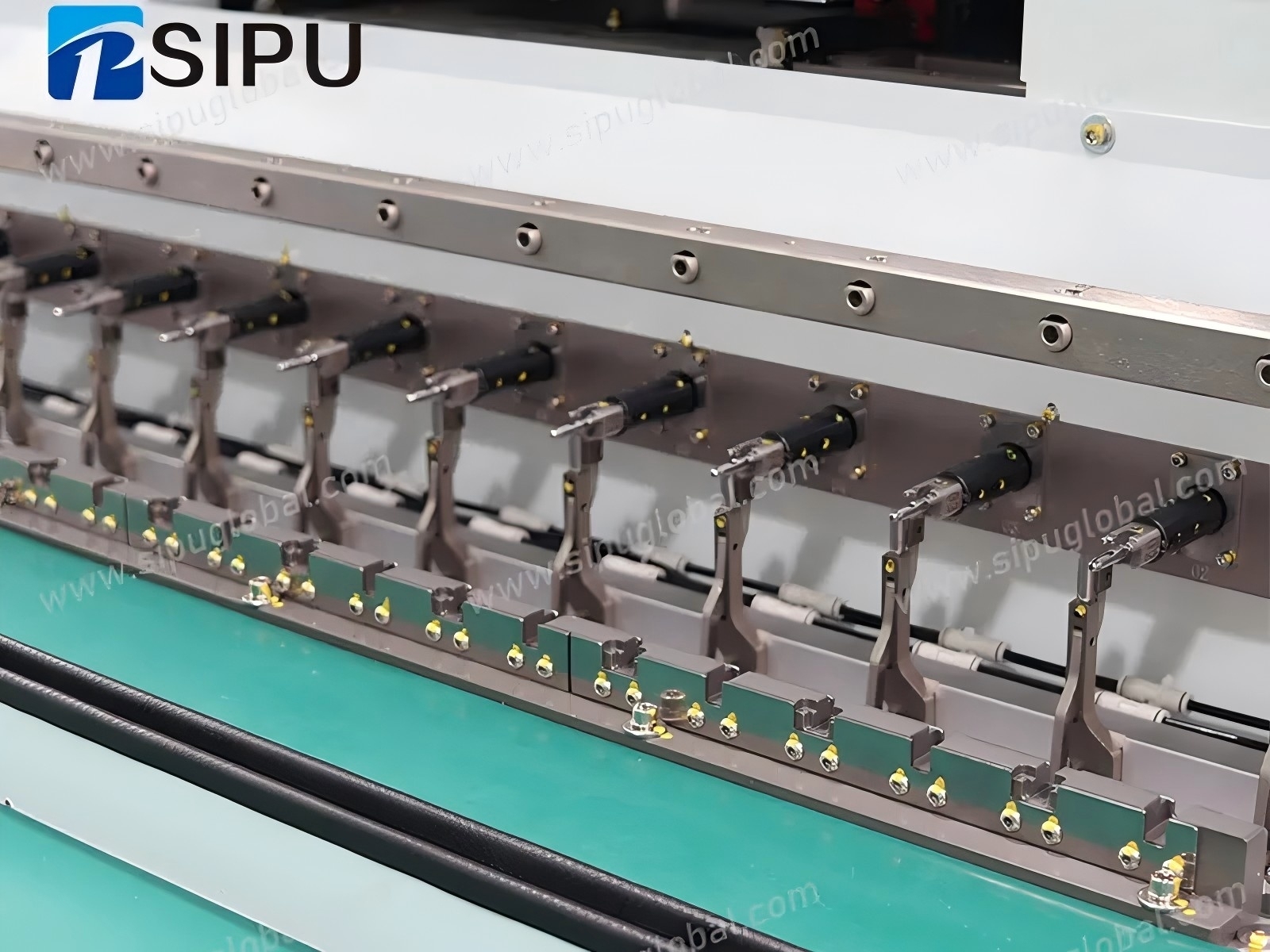
How does coil winding work?
2026-06-25 14:35A Coil Winding Machine puts wire around a core by itself. This makes coils for electrical devices. It is faster and more exact than winding by hand. Look at the table below to see how they compare:
Real-time quality checks lower the number of bad coils.
Vision systems find problems, so coils work well.
The same winding each time makes coils better and more steady.
Key Takeaways
A Coil Winding Machine helps wrap wire around a core. It does this job faster and more exactly than doing it by hand. These machines can make 40 to 60 coils every hour. This is much more than what people can do by hand. Important parts like the spindle, wire guide, and tensioner work together. They make sure the coils are made right and look the same each time. The control system lets users pick things like how many turns and how tight the wire is. This helps the coils fit special needs. Automatic checks look for mistakes and help stop them. This means the coils are better and last longer in electronic devices. There are different kinds of Coil Winding Machines. Some are manual, some are semi-automatic, and some are fully automatic. These types fit different jobs and budgets. Coil Winding Machines are needed to make coils for transformers, motors, inductors, and sensors. They help support modern technology. Picking the best Coil Winding Machine depends on things like coil size, how fast you need to make them, and if you need special changes.
1. What Is a Coil Winding Machine
Definition
A Coil Winding Machine helps you wrap wire around a core to make coils. You use this machine to create coils for many electrical devices. The machine works by moving the wire in a controlled way so each loop sits exactly where it should. You do not need to wind the wire by hand, so you save time and avoid mistakes.
Tip: You can use a Coil Winding Machine to make coils for motors, transformers, and sensors. This machine gives you a neat and tight coil every time.
Main Function
You rely on a Coil Winding Machine to automate the winding process. The machine does several important things for you:
It winds wire or thread into a coil shape without manual effort.
It keeps each loop of wire in the right place for a consistent pattern.
It makes sure the coil works well in devices like electric motors, transformers, and inductors.
You set the machine to control how many turns the wire makes, how fast it moves, and how tight the wire stays. This lets you make coils that fit your needs.
Role in Electronics
You see Coil Winding Machines everywhere in electronics manufacturing. These machines help you build reliable parts for many devices. Here are some ways they improve your work:
They reduce human error, so your coils last longer and work better.
They speed up production, letting you make more coils in less time.
They help you create small, precise coils for modern electronics.
They use servo motors and electronic tensioning to keep the wire tight and in place.
They make sure every coil meets strict quality standards, which is important for industries like aerospace and telecommunications.
When you use a Coil Winding Machine, you get coils that perform well and stay reliable. Even small mistakes in winding can cause big problems in advanced electronics, so these machines matter a lot.
Note: You can trust a Coil Winding Machine to help you meet the demands of today's technology. It gives you the tools to build high-quality coils for everything from simple sensors to complex communication devices.
2. Coil Winding Machine Components
When you look at a Coil Winding Machine, you see several important parts working together. Each component has a special job that helps you make precise and reliable coils. Here is a breakdown of the main components you will find:
Spindle
The spindle is the heart of the Coil Winding Machine. You depend on it to hold and rotate the core or bobbin during the winding process. Without a stable spindle, you cannot get accurate coils.
Core Holding
The spindle grips the core or bobbin tightly.
You place the core onto the spindle, and it keeps the core steady while the machine works.
A secure hold prevents the core from slipping or moving, which helps you get even and neat coils every time.
Rotation Mechanism
The spindle rotates the core at a set speed.
You control the speed to match the type of coil you want to make.
Consistent rotation lets you wind the wire smoothly and evenly.
Multi-spindle machines let you wind several coils at once, which boosts your production and keeps coil quality high.
Tip: A precise spindle helps you keep the wire in the right place and maintain the correct tension. This is key for making high-quality coils.
Wire Guide
The wire guide directs the wire onto the core. You use it to make sure each loop of wire goes exactly where it should.
Even Placement
The wire guide moves back and forth as the core spins.
It lays the wire down in straight, even layers.
You avoid tangles and gaps because the guide keeps the wire in line.
Uniform layering means your coils work better and last longer.
Tensioner
The tensioner controls how tight the wire is as you wind it. You need this part to make sure your coils do not have loose or overly tight wires.
Wire Tightness
The tensioner applies steady pressure to the wire.
You can adjust the tension for different types of wire or coil designs.
Some machines use friction or weights, while others use magnets or electronic systems for more precise control.
Good tension control helps you avoid wire breaks and keeps your coils strong.
Note: If you want your Coil Winding Machine to make perfect coils every time, pay close attention to the spindle, wire guide, and tensioner. These parts work together to give you the best results.
Control System
You rely on the control system to manage every step of the winding process. This part acts as the brain of your Coil Winding Machine. It gives you the power to set, monitor, and adjust how your machine works. Here are the main ways the control system helps you:
Program Management: You can choose from different winding programs. The control system follows your instructions and tells each motor what to do.
Process Automation: You do not need to control every step by hand. The control system automates the winding cycle for you. This reduces mistakes and keeps your coils consistent.
Real-Time Monitoring and Feedback: Sensors check important things like wire tension and speed. If something goes wrong, the control system can make changes right away. This keeps your coils high quality.
Parameter Settings
You use the control system to set key parameters before you start winding. These settings let you control how your coils turn out. Here is what you can adjust:
Number of Turns: You tell the machine how many times to wrap the wire around the core.
Winding Speed: You set how fast the wire moves. This helps you match the speed to the type of coil you need.
Wire Tension: You decide how tight the wire should be. The control system keeps this tension steady during the whole process.
Layering Pattern: You can pick how the wire lays on the core. This helps you make special coils for different uses.
Tip: When you set these parameters, you get coils that meet your exact needs. You also save time because you do not need to check every step yourself.
Motor
The motor gives your Coil Winding Machine the power to work. It turns the spindle and moves the wire guide. You need a strong and steady motor to make good coils. Most machines use servo motors because they are fast and accurate.
Power and Speed
You want your machine to run smoothly and quickly. The motor makes this possible. Here is how the motor helps your machine perform better:
Note: A good motor lets you make coils that are both strong and precise. You can trust your Coil Winding Machine to keep up with your production needs.
3. Working Process
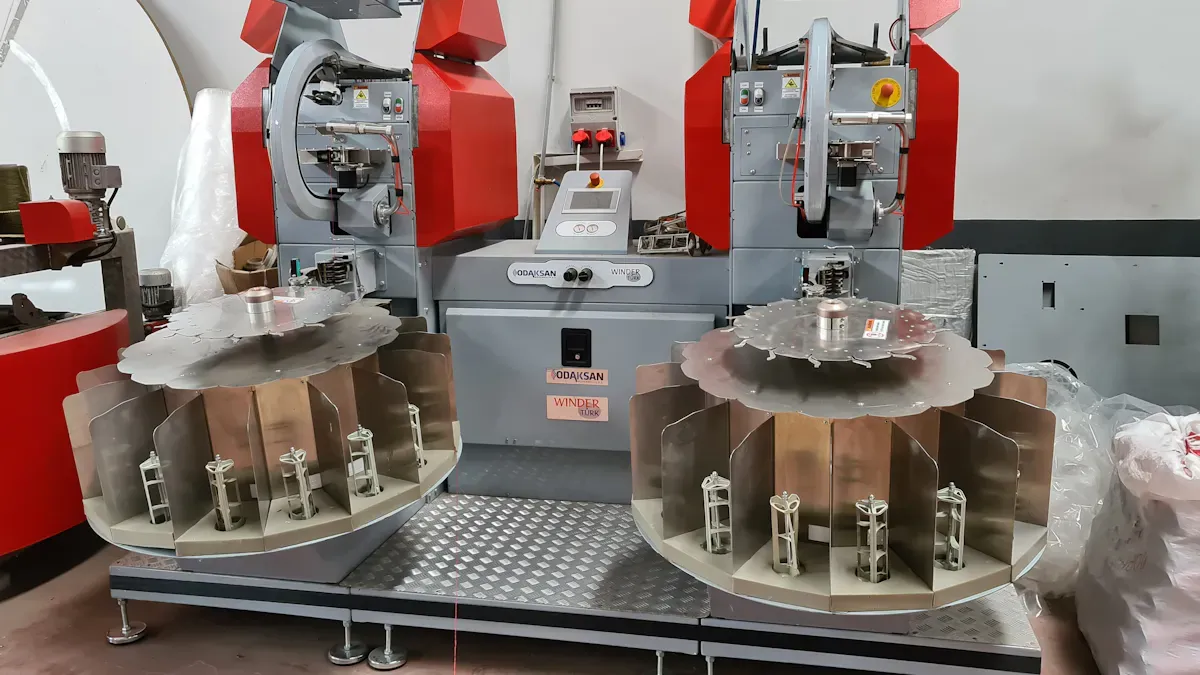
When you use a Coil Winding Machine, you follow a clear set of steps to make sure your coils come out right every time. Here’s how you do it:
Loading the Core
Secure the Core: Place the core or bobbin onto the spindle. Make sure it fits tightly so it does not slip during winding.
Check Alignment: Align the core with the wire guide. This helps the wire lay evenly as the spindle turns.
Lock in Place: Use the machine’s locking mechanism to hold the core steady. A stable core is the first step to a perfect coil.
Tip: Always double-check that the core is secure before you move to the next step. A loose core can ruin the entire coil.
Threading the Wire
Feed the Wire: Take the end of the wire and thread it through the wire guide. The guide keeps the wire in the right path.
Pass Through Tensioner: Pull the wire through the tensioner. This device controls how tight the wire will be as you wind.
Attach to Core: Fix the wire’s end to the core or bobbin. Some cores have grooves to help you start the first layer.
Check for Snags: Make sure the wire moves smoothly. Remove any kinks or bends before you start winding.
Modern machines use sensors and servo-driven systems to keep the wire tension steady. These systems adjust in real time, so you get even layers and less waste.
Closed-loop tension control helps you avoid wire breaks and keeps the coil neat.
Setting Parameters
Before you start winding, you set the machine’s parameters. These settings control how your coil will turn out.
Turns
Set the number of turns you want. This tells the machine how many times to wrap the wire around the core.
Use the control panel or a programmable logic controller (PLC) to enter this number.
Speed
Choose the winding speed. Faster speeds help you finish coils quickly, but slower speeds give you more control for delicate wires.
Variable speed settings let you match the process to your coil’s needs.
Tension
Adjust the tension setting. Proper tension keeps the wire tight and prevents defects.
Electronic tension systems are best because they keep the tension steady, even if the spool size changes.
Here’s why tension control matters at every step:
Keeping the tension steady gives you uniform layers and fewer defects.
Advanced systems use sensors to watch tension and adjust it as you work.
Note: Setting the right parameters is key. If you get the turns, speed, or tension wrong, your coil may not work as needed.
Starting the Winding
When you begin winding with a Coil Winding Machine, you follow some easy steps to make sure things go well:
Activate the Machine: Press the start button or tap the screen. Most new Coil Winding Machines use automation. This helps you work faster and with more accuracy.
Check Safety Systems: Make sure all guards and safety parts are in place. The machine will not run if something is wrong.
Monitor Tension: The Coil Winding Machine uses sensors to keep wire tension steady. This stops the wire from getting too loose or breaking.
Watch the Wire Guide: The wire guide moves back and forth on its own. It puts each loop in the right spot. You do not need to move it yourself.
Quality Monitoring: Many Coil Winding Machines have cameras or sensors. These check for problems as the coil forms. If there is a problem, the machine can stop or tell you right away.
Operator Training: You should know how to use the Coil Winding Machine and follow safety rules. Good training helps you avoid mistakes and keeps the machine working well.
Tip: Automation and real-time checks help you make better coils with less work.
Monitoring and Adjustments
As the Coil Winding Machine works, you need to watch a few things to make sure your coils turn out right. Here is how you can check and change things during the process:
Watch Tension Control: The Coil Winding Machine uses sensors to check wire tension. If the tension changes, the machine fixes it right away.
Check Speed and Position: Special tools track how fast the spindle turns and where the wire is. This keeps the winding even.
Use Feedback Systems: Feedback systems help the Coil Winding Machine react to changes. These use real-time data to keep things on track.
Apply Adaptive Control: Some machines use smart programs to change settings if the wire or core changes during winding.
Predict Problems: Some machines can spot problems before they happen. They adjust tension or speed to stop defects.
Note: Real-time changes help your Coil Winding Machine work well and stop waste.
Finishing and Unloading
When the Coil Winding Machine is done, you need to take out the coil safely and get ready for the next one. Follow these steps:
Stop the Machine: The Coil Winding Machine stops by itself when it finishes the set number of turns.
Release the Core: Unlock the spindle and gently take out the finished coil or bobbin.
Inspect the Coil: Use the machine’s camera or check by hand to make sure the coil looks good and has no problems.
Unload the Coil: Put the finished coil on the unload conveyor or in a storage bin.
Prepare for Next Cycle: Put a new core on the Coil Winding Machine and start again.
Tip: Taking care of your machine and unloading coils carefully helps your Coil Winding Machine last longer and keeps your coils high quality.
4. Coil Winding Machine Types
Manual
A manual coil winding machine gives you full control. You move the wire by hand and turn the spindle yourself. This machine is best for small jobs or custom work. You can change how you wind the coil quickly. Manual machines are good for learning coil winding basics. Schools and hobbyists like manual machines because they are easy and cheap.
Manual machines work well for:
Making a few coils at a time
Teaching coil winding in class
Small projects and new businesses
Trying new designs fast
Tip: Manual machines help you change winding styles quickly. They do not confuse beginners with hard features.
Semi-Automatic
Semi-automatic coil winding machines mix manual work and automation. You set up the machine, and it controls the spindle, wire tension, and guide. You still watch the process and fix things if needed. Semi-automatic machines help you make more coils with fewer errors. You check quality while the machine does the boring parts.
Semi-automatic machines give you:
Machine-controlled spindle and tension
Operator checks for quality
Better speed than manual machines
Flexibility for medium-sized jobs
Semi-automatic machines make your work easier. You get accuracy and can change things as needed. You must pay attention to keep coil quality high.
Fully Automatic
Fully automatic coil winding machines use advanced technology. You set up the machine, and it winds coils with little help from you. These machines use CNC, programmable controls, and real-time checks. You get steady quality and fast coil making.
Fully automatic machines have:
CNC for better accuracy
Programmable settings for custom coils
Smart material handling systems
Real-time checks with sensors and cameras
Note: Fully automatic machines are great for big factories. You get fast coil making and reliable coils every time.
You pick the coil winding machine that fits your job, money, and skill.
Operation Differences
When you compare different types of Coil Winding Machines, you see big differences in how they work and what they offer. Each type fits a different need in your workshop or factory. Here’s how their operation sets them apart:
Manual Coil Winding Machine
You control every step by hand. You turn the spindle and guide the wire yourself.
You can change the winding style quickly. This helps when you make custom coils or try new designs.
You need to watch the process closely. Mistakes can happen if you lose focus.
You spend more time on each coil. This limits how many coils you can make in an hour.
Semi-Automatic Coil Winding Machine
You set up the machine, and it handles the spindle, wire guide, and tension.
You still check the coil as it winds. You can stop the machine to fix problems.
You get more coils per hour than with manual winding. The machine keeps the wire tight and even.
You save time and reduce errors, but you still need to pay attention.
Fully Automatic Coil Winding Machine
You program the Coil Winding Machine and let it run. It winds coils with little help from you.
The machine uses sensors and cameras to check each coil as it forms.
You can make 40 to 60 coils per hour. One technician can watch several machines at once.
The machine fixes small problems by itself. This keeps your coils consistent and reduces waste.
Note: Automated Coil Winding Machines use real-time quality checks. They measure coil resistance, turn count, and size as they work. If something goes wrong, the machine adjusts right away. This lowers scrap rates and saves you money on materials.
Here’s a table to help you see the main differences:
Increased Production Speed: Automated Coil Winding Machines work much faster than manual ones.
Labor Cost Reduction: One person can manage many machines, so you save on labor.
Quality Consistency: Automated machines keep each coil the same, so you get fewer defects.
You should pick the Coil Winding Machine that matches your needs. If you want speed and low costs, go for a fully automatic machine. If you need flexibility for small jobs, a manual or semi-automatic machine may work better. Each type helps you make coils, but the way you use them changes your results.
5. Applications and Adaptations
Transformers
A Coil Winding Machine helps make coils for transformers. These machines can make coils in many shapes and sizes. You can control how many loops the coil has. You also control wire cutting, hooking, de-spooling, tension, and moving the wire. Automated machines help stop the wire from breaking. They give you the same results every time. This is very important for medium or heavy-duty winding jobs. You get coils with no mistakes. These coils work well in power, distribution, and instrument transformers.
Coil Winding Machines use different wire thicknesses for transformer coils.
You choose how many turns and how tight the wire is for each coil.
Automated machines help you avoid errors and work faster.
Tip: Using a Coil Winding Machine for transformers gives you strong coils that meet tough industry rules.
Motors
Coil winding machines are used to make coils for electric motors. These machines can handle many coil types, like toroidal, layered, or random-wound coils. You pick the best machine for your job. Fast and automatic machines help you work quicker. You can run them all day and save on labor. CNC-controlled machines are very exact. This matters when you need coils with perfect details. You use less material and make fewer mistakes.
You can change coil designs fast with custom settings.
You can swap parts to make different coil types.
You can make more coils without buying new machines.
Note: Coil winding machines work for both small jobs and big motor factories.
Inductors
Coil winding machines are needed to make inductors for many things. These machines wind coils by themselves, so you get perfect coils every time. Automation makes the coils very accurate and the same each time. This is important for inductors in electronics, power supplies, and communication tools. You make fewer mistakes and build good parts fast.
More renewable energy projects mean more need for coil winding machines. You use them to make good coils for transformers and generators. These machines make it easier to build strong inductors and sensors.
Tip: Automated coil winding machines help you make coils that last longer and work well for today’s industries.
Sensors
You use a Coil Winding Machine to make coils for many types of sensors. These sensors help measure things like temperature, pressure, and movement. The machine lets you create small, precise coils that fit inside sensor housings. You can trust the machine to keep each wire loop in the right spot.
Here are ways a Coil Winding Machine helps you build sensor coils:
Consistent Quality: The machine winds each coil the same way. You get reliable sensors every time.
Tiny Coils: You can make very small coils for compact sensors. The machine handles thin wire without breaking it.
Custom Shapes: You can set the machine to make round, oval, or flat coils. This helps you match the coil to the sensor’s needs.
Fast Production: The machine works quickly. You can make many sensor coils in less time.
Tip: Use a Coil Winding Machine with electronic tension control. This keeps the wire tight and stops breaks, even with thin wire.
Many industries use sensor coils made by a Coil Winding Machine. You find these coils in cars, medical devices, and smart home products. When you use the right machine, you get sensor coils that last longer and work better.
Adapting for Coil Types
You often need to change how your Coil Winding Machine works to match different coil types. Each coil has its own needs. You must adjust the machine to get the best results.
Here is how you adapt your Coil Winding Machine for different coils:
Bobbin Design: Pick a bobbin that fits your coil. Some bobbins have grooves to help you lay the wire in neat layers.
Wire Specifications: Choose the right wire size. The machine must handle tight tolerances so your coil works as planned.
Tension Control: Set the tension before you start. Use electronic or magnetic tension systems for steady results. These work better than friction units.
Variable Speed: Adjust the speed of your Coil Winding Machine. Slow speeds help with delicate coils. Fast speeds work for bigger coils.
Computer Control: Use machines with computer controls for more accuracy. Closed-loop systems help you keep the motor movements exact.
Note: When you set up your Coil Winding Machine for each coil type, you get better quality and fewer mistakes.
You can make many types of coils with one Coil Winding Machine. Just change the settings and parts to match your project. This flexibility helps you meet the needs of different industries and products.
A Coil Winding Machine wraps wire around a core fast and accurately.
Each part, like the spindle and control system, helps make strong coils.
When picking a machine, think about these things:
Electronics are getting smaller and smarter. You will see more machines with AI and green features:
Remember these tips to choose the right machine and be ready for new changes.
FAQ
What does a Coil Winding Machine do?
A Coil Winding Machine wraps wire around a core. You use it to make coils for electronics like motors, transformers, and sensors. The machine helps you work faster and get better results than winding by hand.
Why should you use a Coil Winding Machine instead of winding by hand?
You get more coils in less time with a Coil Winding Machine. The machine keeps each coil neat and even. You also avoid mistakes that can happen when you wind wire by hand.
Can you use a Coil Winding Machine for different wire sizes?
Yes, you can use a Coil Winding Machine with many wire sizes. You just adjust the tension and guides. This lets you make coils for many types of devices.
How do you keep the wire tight on a Coil Winding Machine?
You set the tension control on your Coil Winding Machine. The tensioner keeps the wire tight as you wind. This stops the wire from getting loose or breaking.
What safety steps should you follow when using a Coil Winding Machine?
You should always check that guards are in place. Keep your hands away from moving parts. Turn off the Coil Winding Machine before you fix or clean it.
Can you make custom coils with a Coil Winding Machine?
Yes! You can set the number of turns, speed, and tension. This lets you make custom coils for special projects or new designs.
How do you choose the right Coil Winding Machine for your needs?
Think about the size of your coils, how many you need, and your budget. Manual machines work for small jobs. Automatic Coil Winding Machines help you make lots of coils fast.
What problems can a Coil Winding Machine help you avoid?
A Coil Winding Machine helps you avoid loose wires, uneven coils, and wire breaks. The machine checks for mistakes as it works, so you get better coils every time.