


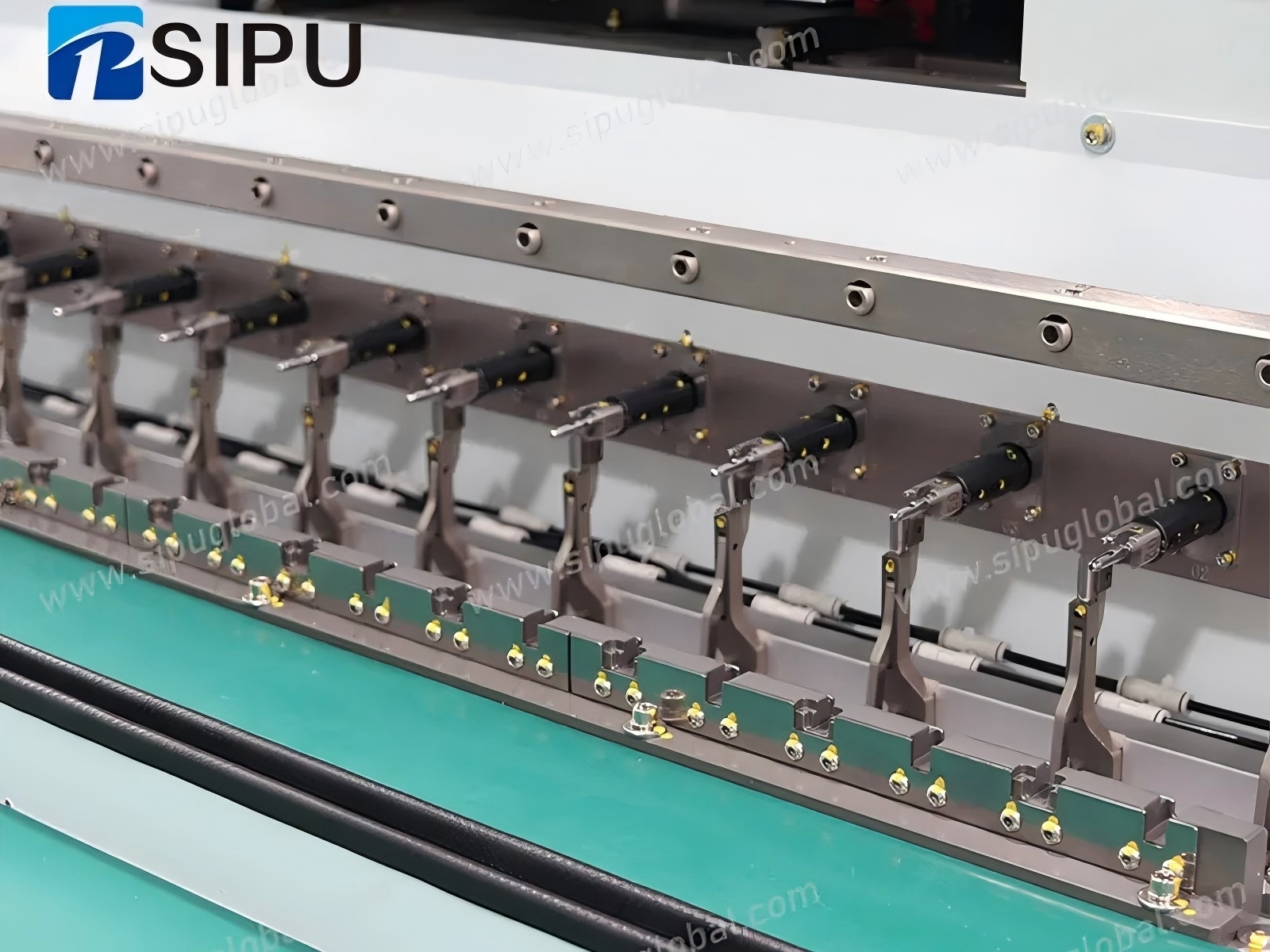
Standalone vs. Inline Coil Taping Machine: How to Choose the Right Automation Setup?
2026-11-21 11:44As coil production orders grow and product requirements become more demanding, manufacturers often face an important question: Should they continue using a standalone coil taping machine, or integrate the taping process into an automated production line?
For factories producing multiple coil models, a standalone machine offers flexibility and independent operation. However, when production capacity needs to expand, manual loading, unloading, and material transfer between processes may become limitations.
Moving toward an inline coil taping solution can help manufacturers streamline production workflows and improve coordination between different manufacturing processes.
At SIPU, we provide coil taping equipment for different production requirements, from independent multi-station machines to integrated automated production solutions. Based on actual customer applications, we understand that the best solution is not necessarily the most automated one, but the one that fits the customer's production needs.
1. Standalone Coil Taping Machines: Flexibility for Different Production Needs
For manufacturers handling multiple coil specifications or relatively small production batches, a standalone coil taping machine can be a practical choice.
Unlike an integrated production line, a standalone machine operates independently. Operators can load coils, complete the taping process, and unload finished products without coordinating with other machines.
SIPU's four-station semi-automatic coil taping machine is designed for this type of application. It requires manual loading and unloading while automatically performing the taping operation.
Why do manufacturers choose standalone coil taping machines?
Flexible Production: Suitable for manufacturers handling different coil models and batch sizes.
Independent Operation: Does not require connection to an upstream winding machine.
Flexible Installation: Can be installed independently within an existing workshop.
Lower Integration Complexity: Manufacturers can automate the taping process without immediately investing in a complete production line.
For relay coil manufacturers, electronic component factories, and other coil producers, this configuration provides a practical way to improve taping automation while maintaining production flexibility.
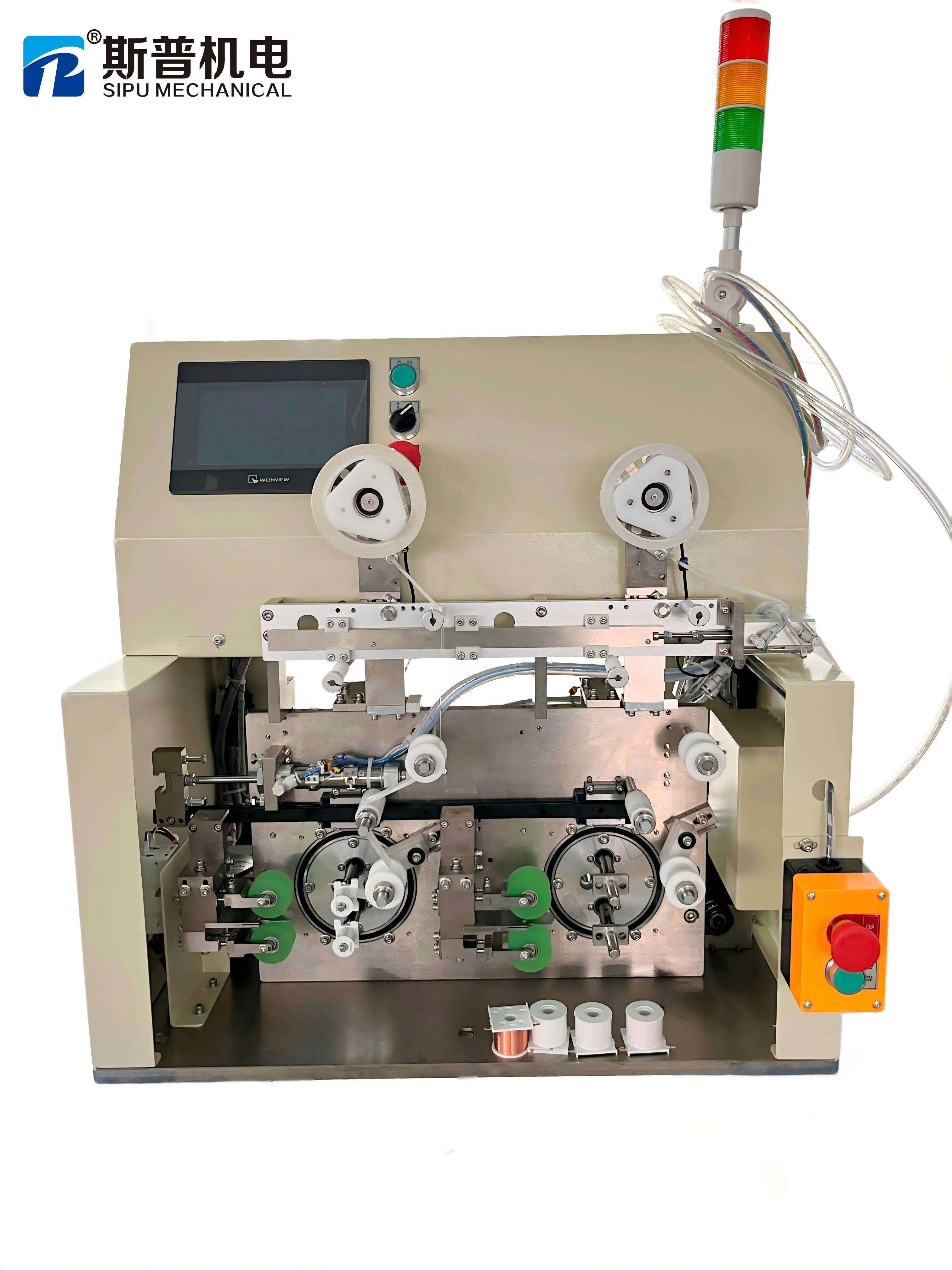
2. Inline Coil Taping Machines: Integrating Taping into Automated Production
When production requirements increase, manufacturers may begin looking beyond independent machines.
Consider a factory where coils are first produced by automatic winding equipment and then transferred to a separate taping station. As order volumes grow, the movement of workpieces between processes may require additional operator involvement and production coordination.
In this situation, integrating the coil taping machine into an automated production line can be a more suitable approach.
An inline coil taping solution works together with upstream and downstream equipment. Depending on the production system, automatic material transfer, positioning, taping, and subsequent processing can be coordinated within one workflow.
SIPU's automatic coil taping equipment can be integrated into 24-axis and 32-axis coil production lines, supporting automated winding, taping, and soldering processes.
Key advantages of inline integration include:
Reduced Manual Material Handling: Automatic transfer can reduce the need for operators to move coils between individual processes.
Better Process Coordination: Taping operations can work in coordination with upstream winding and downstream assembly processes.
More Consistent Production Flow: Integrated equipment helps establish a more organized manufacturing workflow.
Automation Expansion: Manufacturers can develop a more integrated production system as their requirements evolve.
For manufacturers with relatively stable product specifications and higher production demands, inline integration can provide a practical foundation for further automation.
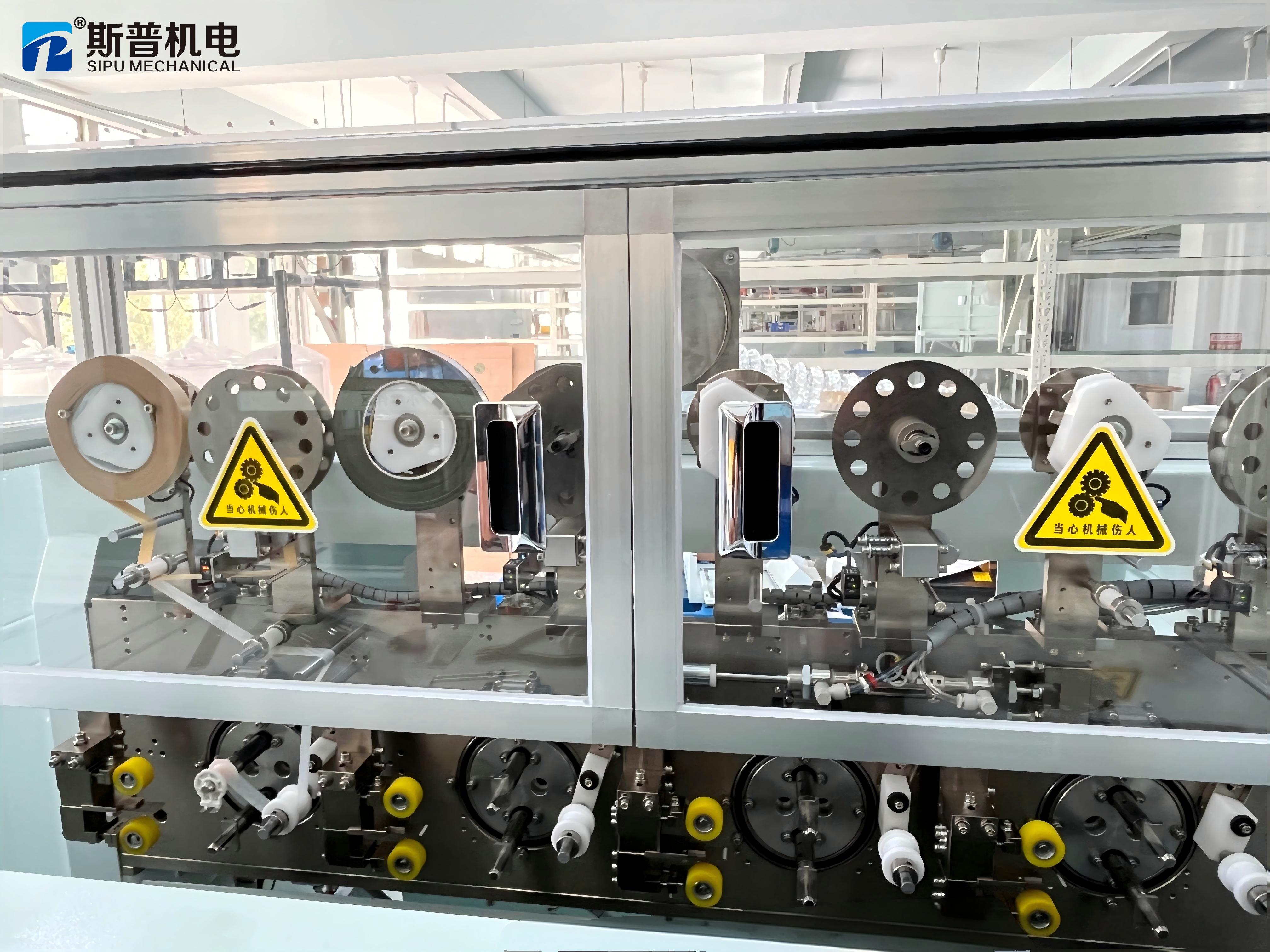
3. From Standalone Equipment to Inline Automation: When Should You Consider an Upgrade?
A change in production requirements does not always mean that manufacturers need to replace all existing equipment.
In some manufacturing applications, an independent coil taping machine is sufficient during the initial production stage. As business grows, the factory may need to increase output, reduce manual handling, or coordinate multiple production processes more efficiently.
At this point, manufacturers can evaluate whether integrating the taping process into an automated line would provide sufficient operational benefits.
For example, a relay coil manufacturer may initially use an independent four-station taping machine. If production expands and the factory introduces a multi-spindle automatic winding system, integrating the taping process into the overall production line may become a more suitable option.
This transition should be evaluated according to actual production requirements rather than automation level alone.
Before upgrading, manufacturers should consider:
Whether existing winding equipment can communicate with the proposed production system.
Whether coil specifications remain stable during production.
Whether manual material transfer is creating a production bottleneck.
Whether available factory space supports equipment integration.
Whether the expected productivity improvements justify the additional investment.
A properly planned automation upgrade can help manufacturers improve production coordination without introducing unnecessary equipment complexity.
4. Standalone vs. Inline Coil Taping Machines: Which Is Right for Your Factory?
Both configurations have their advantages. The decision should be based on actual manufacturing conditions.
| Comparison | Standalone Machine | Inline Solution |
| Operation | Independent operation | Integrated production workflow |
| Loading and Unloading | Usually manual | Can be automated |
| Product Flexibility | Suitable for varied production | Depends on line configuration |
| Material Transfer | Usually handled separately | Can be integrated |
| Installation | Relatively flexible | Requires system coordination |
| Investment | Generally lower integration cost | Higher system integration requirements |
| Best Application | Flexible batch production | Coordinated automated production |
Choose a standalone machine if:
Your factory produces multiple coil models.
Production orders change frequently.
You want to automate the taping process independently.
Your existing factory layout does not require a fully integrated line.
Consider an inline solution if:
Your factory operates automatic winding equipment.
Production volume is relatively high.
You want to reduce manual transfer between processes.
You plan to expand your automated coil production capabilities.
The right configuration depends on your production volume, product characteristics, available space, and future development plans.
5. How SIPU Provides Customized Coil Taping Solutions
Different coil products require different taping processes and equipment configurations.
Coil dimensions, insulation tape specifications, winding structures, production capacity, and automation requirements all influence the final machine design.
At SIPU, we provide coil taping equipment for different manufacturing applications, including semi-automatic standalone machines and equipment integrated into automated coil production lines.
Our existing equipment options include:
Two-station and four-station taping configurations.
Semi-automatic operation with manual loading and unloading.
Automatic taping processes with adjustable operating parameters.
Integration with 24-axis and 32-axis coil production lines.
Customized equipment configurations based on specific production requirements.
Rather than recommending the same machine configuration to every customer, we evaluate the actual application and production workflow before determining a suitable solution.
Our goal is to help manufacturers find a practical balance between production flexibility, automation, equipment investment, and long-term manufacturing efficiency.
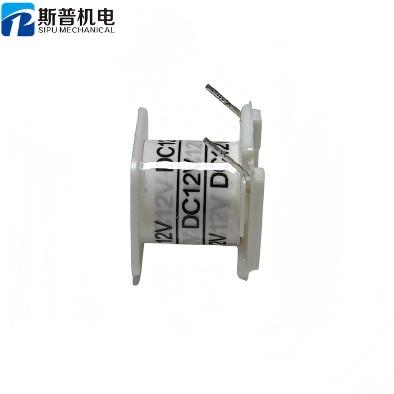
6. What Information Should You Prepare Before Purchasing a Coil Taping Machine?
To help equipment manufacturers recommend a suitable solution, buyers should prepare several important details before requesting a quotation.
1) Coil Drawings or Samples
Provide product drawings or physical samples so the machine design can be evaluated against the actual coil structure.
2) Coil Dimensions
Include the outer diameter, inner diameter, height, and other relevant dimensions.
3) Insulation Tape Specifications
Specify tape material, width, thickness, and required wrapping arrangement.
4) Production Requirements
Explain your expected production volume, working hours, and product changeover frequency.
5) Automation Preferences
Indicate whether you need an independent taping machine or an integrated solution connected to existing winding equipment.
Providing this information helps the manufacturer assess equipment compatibility and recommend a more appropriate configuration.
Conclusion: The Right Coil Taping Machine Starts with the Right Production Plan
A standalone coil taping machine and an inline taping solution serve different manufacturing requirements.
For factories prioritizing production flexibility and independent operation, a standalone machine can be an effective choice. For manufacturers looking to improve process coordination and expand automation, integrating taping equipment into an automated production line may offer greater long-term value.
At SIPU, we focus on providing practical coil taping equipment and customized automation solutions based on real manufacturing requirements.
Whether you need a standalone multi-station coil taping machine or an integrated solution for an automatic coil production line, our team can help evaluate your application and identify a suitable configuration.
Looking for an automatic coil taping machine for your production facility?
Contact SIPU today. Send us your coil drawings, product samples, and production requirements. Our engineering team will help you explore the right coil taping solution.
SIPU – Your Partner in Coil Winding and Automation Solutions.