


Sipu: Precision Lies in the Details
2026-08-03 10:20Full-Series Coil Automation Equipment Ensures Batch Stability Through Strict Detail Control
In the mass production of coils for inductors, relays, solenoid valves, and automotive electronics, the manufacturing chain is long — from wire winding and pin soldering to terminal insertion and over-molding. Any tiny oversight in a single step can trigger batch-level defects: broken insulation, cold solder joints, winding irregularities, or insulation failures.
When sourcing automation equipment, many manufacturers instinctively focus on major components like motors and the main control system. Small, unremarkable structures — wire guides, detection modules, protective elements, and soldering accessories — are often overlooked. But stable production yield is never sustained by big-ticket hardware alone. It is the cumulative result of every detail accessory working in concert across the entire process.
Xiamen Sipu Mechanical specializes in the R&D and manufacturing of complete coil automation equipment, with a product portfolio covering coil winding machines (from 6-spindle to 32-spindle models), soldering machines, terminal insertion machines, and tape wrapping machines. This article zooms into two critical steps — winding and soldering — and unpacks the refined design logic built into Sipu’s full equipment series.
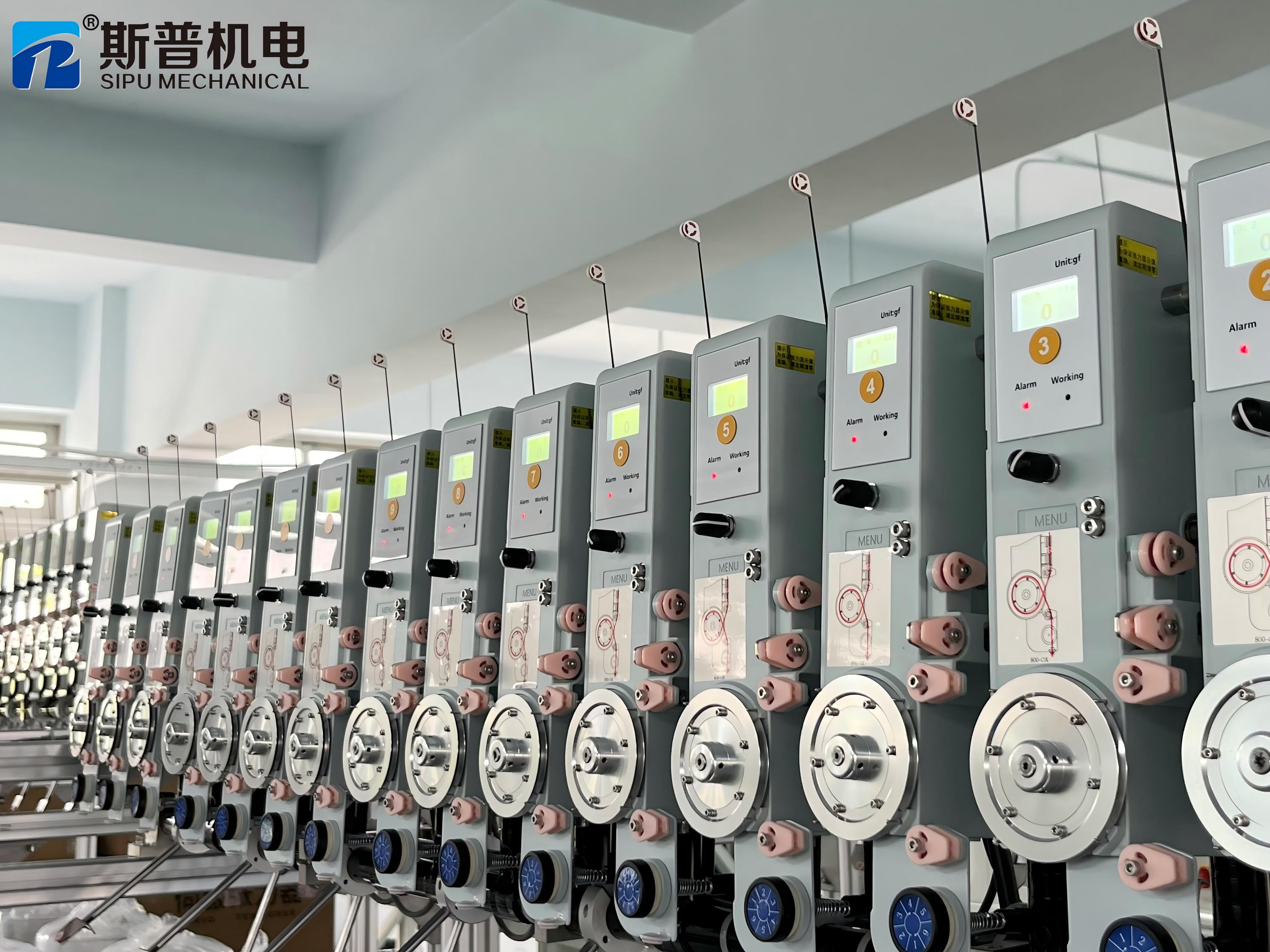
1. Servo Tensioner: Dynamic Force Control for Stable Fine-Wire Winding at High Speed
Conventional equipment often relies on mechanical tension structures, where force fluctuations are inevitable. When winding fine wire (starting from 0.02mm) at high speed, even slight tension inconsistency leads to uneven wire layering, overlapping turns, and collapsed end faces.
Every Sipu winding machine (6 to 32 spindles) comes standard with an independent servo tensioner. Tension adjusts dynamically in real time to match winding speed, achieving a control accuracy of ±0.5g. Whether processing ultra-fine enameled wire down to 0.02mm or standard thicker wire gauges, the wire tension remains consistent throughout the entire winding cycle. Each turn is placed with uniform spacing, eliminating common close-winding defects right from the source.
2. Pigtail Curved Wire Guide: Smooth Surface Routing to Prevent Enamel Damage
The insulation coating on fine enameled wire is thin and fragile. If the wire path in conventional equipment has sharp edges or angular contact points, the rapid reciprocating movement of the wire can easily wear through the enamel layer, leading directly to short circuits and coil scrap.
Sipu’s full range of winding machines uniformly adopts a custom pigtail curved wire guide design, with an arc radius R ≥ 5mm. The entire guide surface is smoothly contoured with no sharp or hard edges. The wire slides effortlessly, and even under long-term high-speed operation, the enamel insulation remains intact. This design is well-suited for frequent wire changes and flexible production across multiple bobbin types.
3. Wool Felt Wire Buffer: Dual Protection Against Dust and Abrasion to Safeguard Insulation
During storage and transfer, enameled wire easily picks up dust and metallic particles. As hard impurities rub against the wire surface at high speed, they continuously wear down the enamel coating, planting hidden risks of leakage and short circuits.
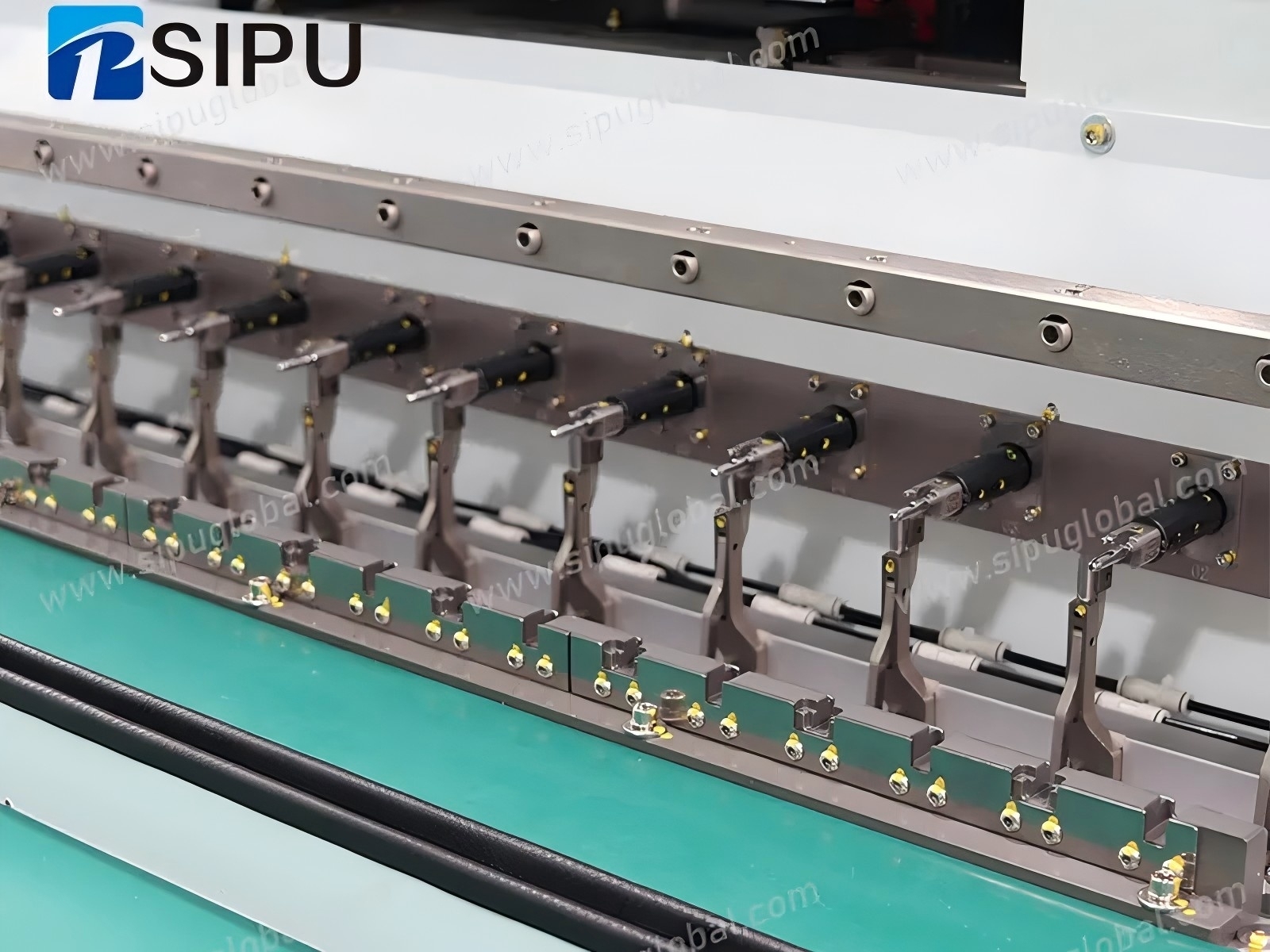
At every wire-path point, Sipu winding machines incorporate high-density wool felt. As the wire passes through, the felt automatically wipes away surface dust and debris while providing a gentle, flexible buffer that softens frictional contact. This keeps the wire clean and protects the enamel insulation layer — a critical requirement for high-insulation applications like automotive electronics and military-grade inductors. For consistent performance, it is recommended to replace the wool felt every 500 operating hours or whenever the wire specification changes.
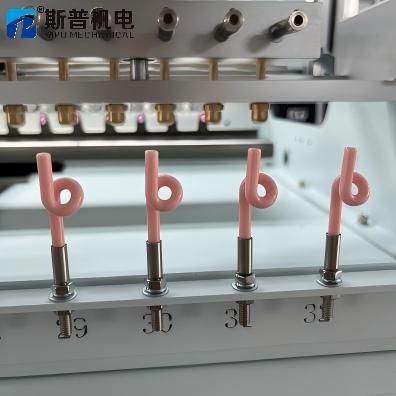
Pogtail Curved Wire Guide
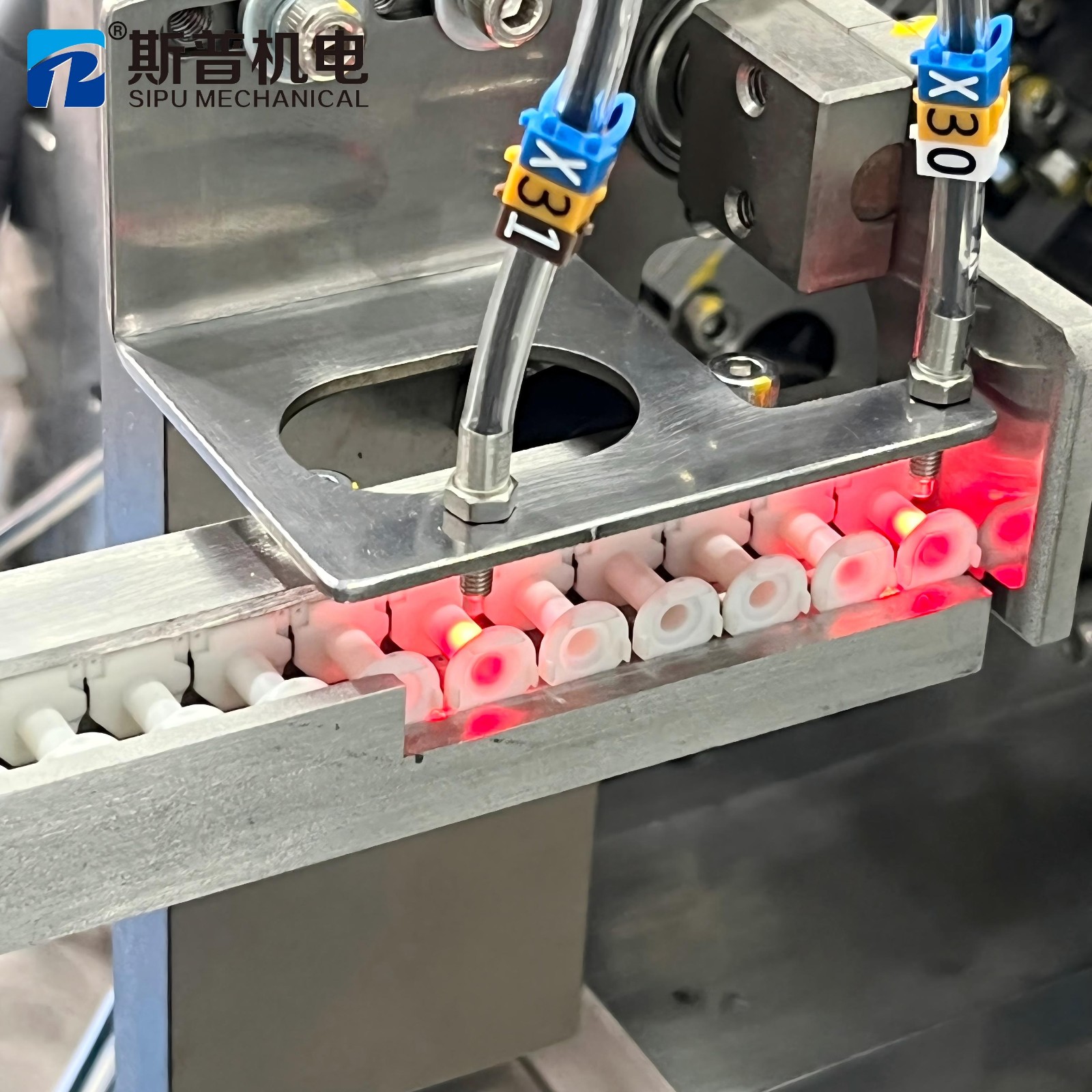
Bobbin detection
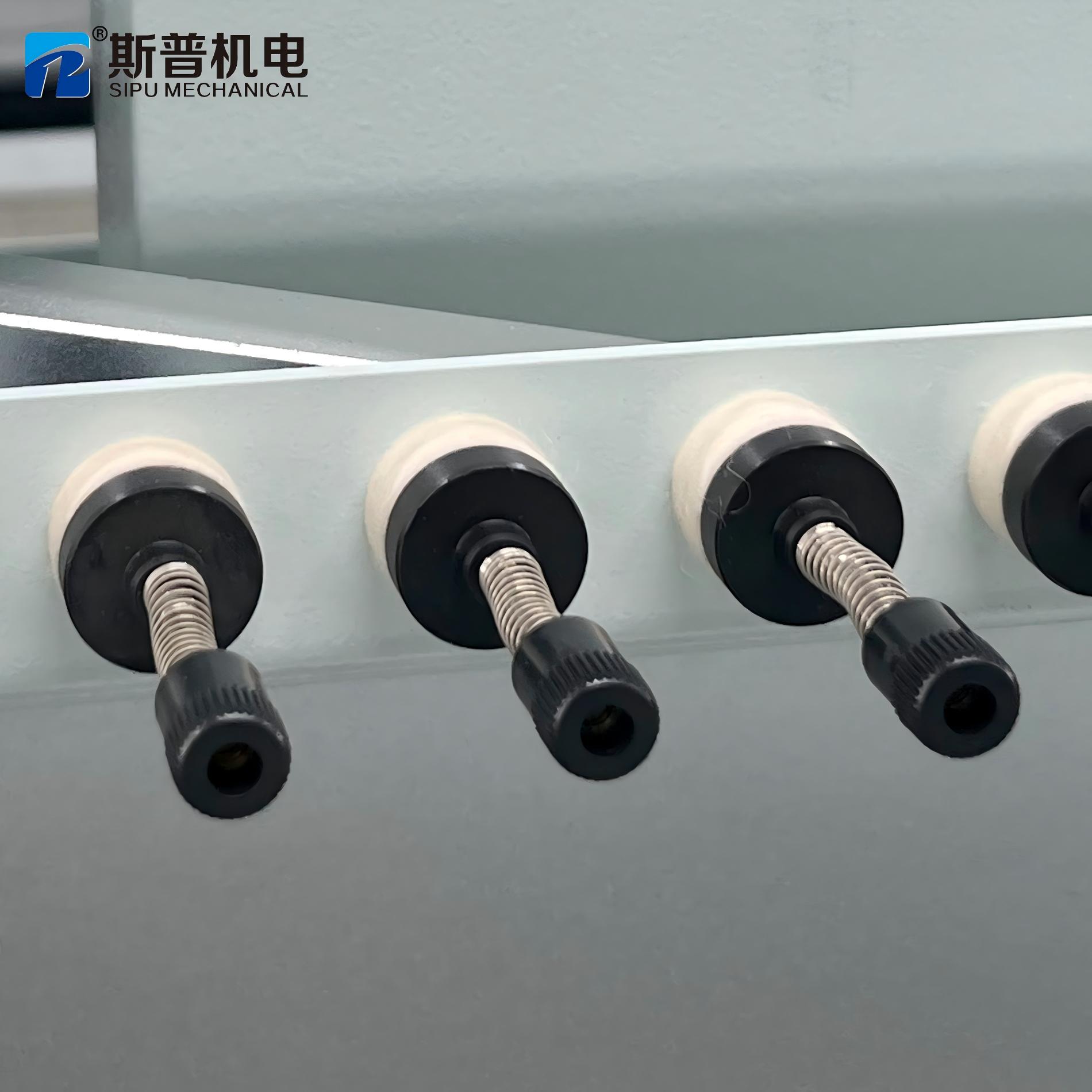
Wool Felt Wire Buffer
4. Infrared Position Detection: Independent Monitoring at Each Station to Prevent Misaligned Winding
Bobbins that are shifted, not fully seated, or missing altogether can cause skewed coil positioning, uneven turn counts, and tilted end faces — hidden sources of batch defects that are extremely difficult to catch by manual visual inspection.
Sipu’s multi-spindle winding machines are equipped with an independent infrared position sensor at each station. The winding cycle only starts when the bobbin is precisely located and properly seated. If a bobbin is offset, the station is empty, or placement is incomplete, the equipment automatically triggers an alert and halts operation. The detection response time is ≤ 50ms, ensuring that every coil in high-volume production shares the same winding reference baseline.
5. Constant-Temperature Solder Pot: Precise Thermal Control for Uniform Solder Joint Quality Across All Configurations
After winding, pin dip soldering is a key step for coil electrical reliability. Temperature instability easily produces cold solder joints, insufficient solder fill, solder spikes, or excessive solder buildup — directly compromising electrical stability.
Sipu soldering machines and integrated winding-soldering units all feature a PID-controlled constant-temperature solder pot. The solder bath temperature is held within ±2°C of the set value, ensuring uniform solder fluidity. The result is evenly tinned pins with smooth, consistent solder fillets. This same thermal control standard extends across entire inline production systems, so solder joint quality remains identical whether running on a standalone machine or a fully connected automated line.
Standardized Details: A Universal Design Principle Across the Entire Equipment Range
The five process details described above — servo-controlled wire path, contoured guide surfaces, infrared position detection, wool felt protection, and constant-temperature soldering — are not limited to any single machine model.
They form a universal design standard applied across Sipu’s complete suite of coil automation equipment: winding machines, soldering machines, terminal insertion machines, and tape wrapping machines. Core hardware components define the upper limit of production capacity; standardized details safeguard the bottom line of batch yield. Whether operating as standalone units or linked into a multi-machine production line, the process standards remain consistent and undiluted.