


SIPU 13F Relay Coil Line Delivered
2026-06-26 10:3032-Spindle · Multi-Station · 500–600 pcs/h · 7 Processes
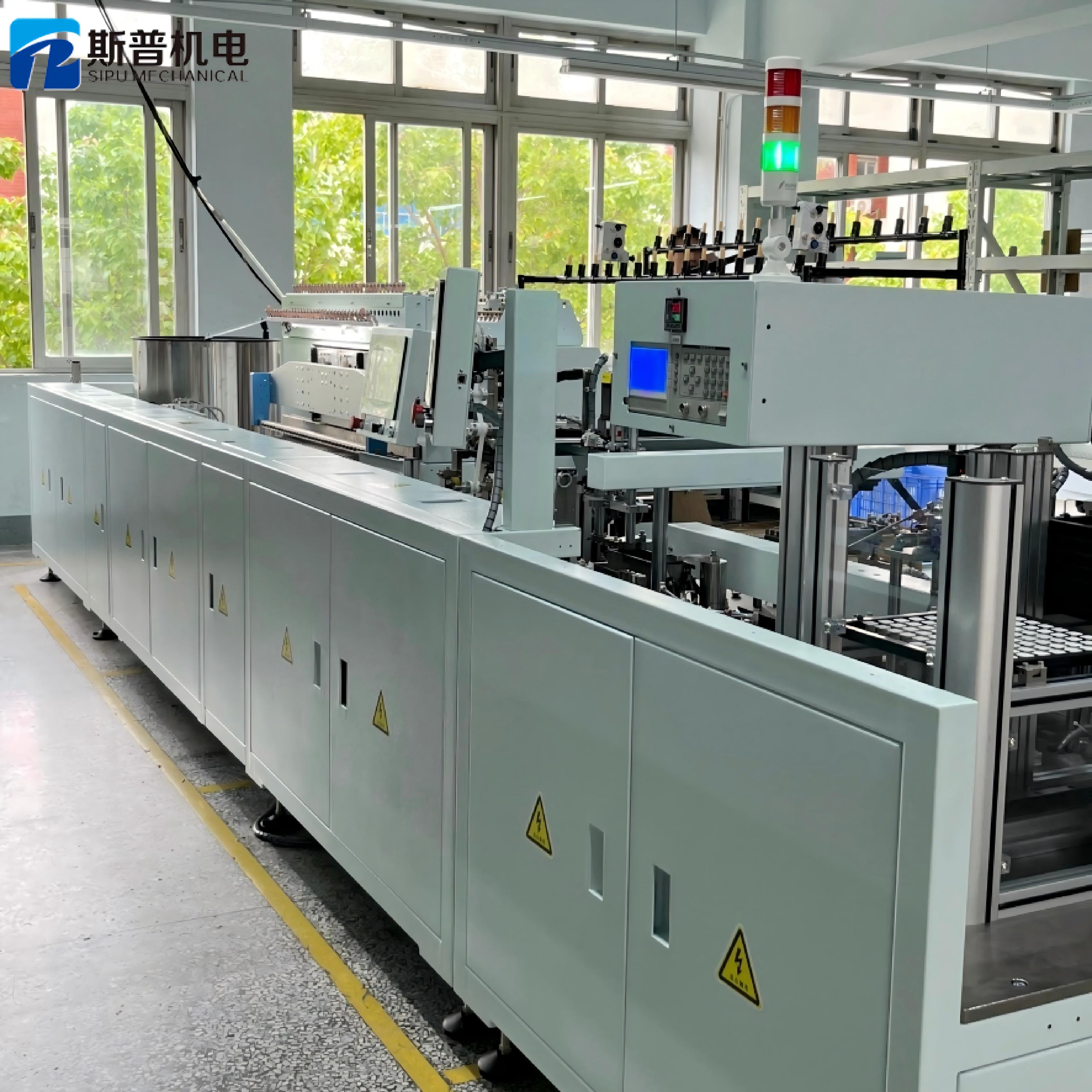
Recently, our self-developed fully automatic 13F relay coil production line has been completed and shipped to a relay manufacturer for batch production. The line deeply integrates seven core processes — bobbin feeding, 32-spindle precision winding, automatic taping, rosin dipping, soldering, resistance testing, and automatic material collection. Both the cycle time and first-pass yield have reached industry-leading levels, marking a new stage of "full automation and intelligence" in intermediate relay coil manufacturing.
1. What is a 13F Relay/Intermediate Relay?
The 13F relay is a small-to-medium-power electromagnetic relay named after its industry-standard pin configuration and footprint. It is typically PCB through-hole or socket-mounted, featuring compact size, reliable contact, strong load capacity (5A–20A), and long electrical life (100,000+ operations). It is widely used in:
Ø Automotive Electronics: Body Control Module (BCM), lighting systems, wiper motors, oil pumps, AC compressors
Ø Smart Home: Smart switches, HVAC control, security systems
Ø Industrial Automation: PLCs, servo drives, instrumentation
Ø New Energy: EV charging stations, PV inverters, energy storage BMS
With NEV penetration continuing to rise, the relay content per vehicle has grown from 20–30 units in traditional ICE vehicles to 40–60 units (Source: industry research compilation). The 13F series, the "workhorse" for automotive-grade signal and load switching, sees market demand growing at a CAGR of over 10% (Source: same).
Global Major Manufacturers
The global intermediate relay market is led by manufacturers from China, Japan, Germany, and the U.S. Xiamen Hongfa (HONGFA) — ranking in the global top three and China's #1 in the relay industry — has established its HF115F, HF13F, and HF14F series as benchmarks for automotive-grade relays, with long-term supply to leading OEMs and Tier-1 customers including Volkswagen, BMW, BYD, and CATL.
Internationally, Omron's G2R/G6K series, Panasonic's LK/PQ series, and TE Connectivity's OEG/P&B series have long occupied the high-end market, forming differentiated competition with domestic brands.
2. The Pain Points of Traditional Lines: Why Upgrade from Standalone Machines to Integrated Lines
In conventional relay coil manufacturing, most manufacturers use multiple standalone machines in series to complete the 7 core processes. This "process-decentralized" approach has the following industry-wide pain points:
l Process fragmentation, large footprint — 7 processes scattered across separate machines, with long material flow paths
l High labor dependency — Loading, transfer, and inspection require multiple operators
l Limited cycle time — Single-machine efficiency is the bottleneck; conventional setups struggle to exceed 200 pcs/h
l Automotive-grade yield fluctuation — Cross-process transfer introduces secondary damage; resistance consistency is hard to stabilize
l Data silos — Standalone machines run independently; MES traceability is difficult
The integrated line delivered this time is designed precisely to address these industry pain points — replacing 7 standalone machines with one integrated line, achieving a true "7-in-1" production-level integration.
3. Production Line Process: 7 Processes in One Smooth Run
The line adopts a multi-station integrated layout with stable cycle time and highly automated processes:
ü Automatic Bobbin Feeding — Vibratory bowl + sorting track for automatic ordering, robotic arm precision loading
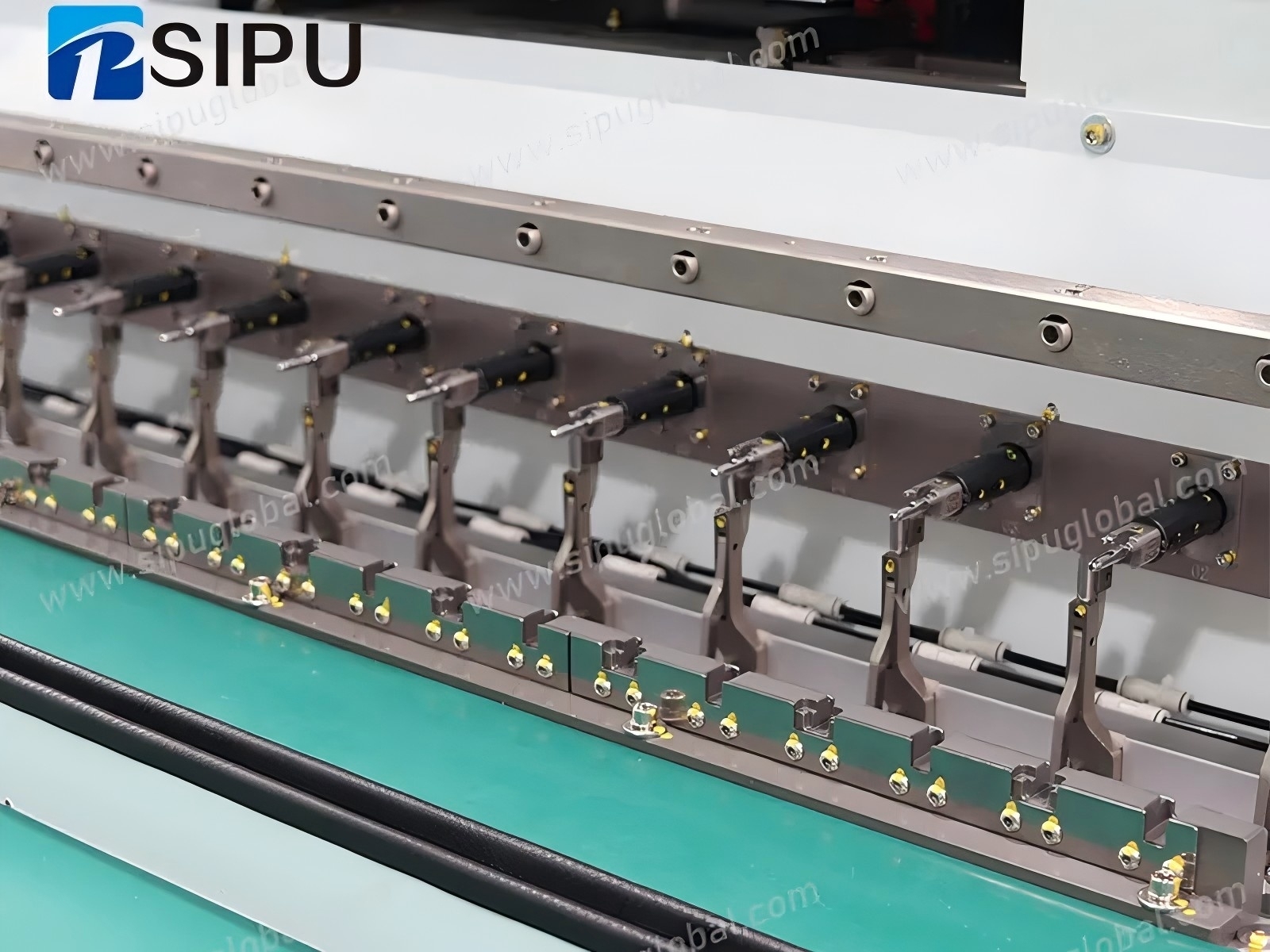
ü 32-Spindle Precision Winding — 32 stations winding simultaneously, with constant enameled-wire tension and precise turn-count control
ü Automatic Taping — Automatic wrapping of insulating tape on the winding, accurate positioning
ü Rosin Dipping — Automatic flux dipping to ensure solder wettability
ü Automatic Soldering — Dip soldering process, full and reliable solder joints
ü Resistance Testing — 100% online testing, with automatic rejection of out-of-spec resistance
ü Automatic Material Collection — Automatic finished-product arrangement and tray loading
The line uses a servo + PLC + bus control architecture, supports MES integration, and enables automatic data upload, full traceability, and quality analysis.
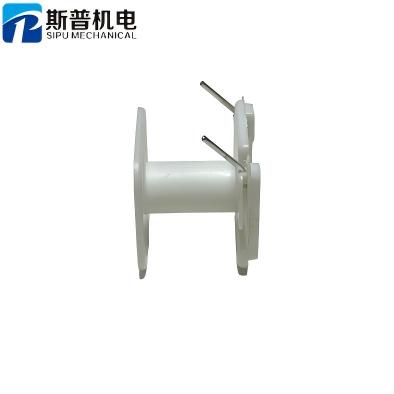
Empty bobbin
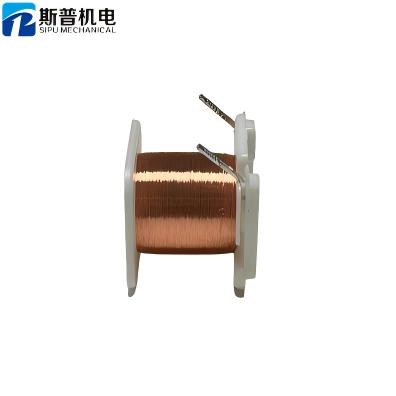
Wound Coil
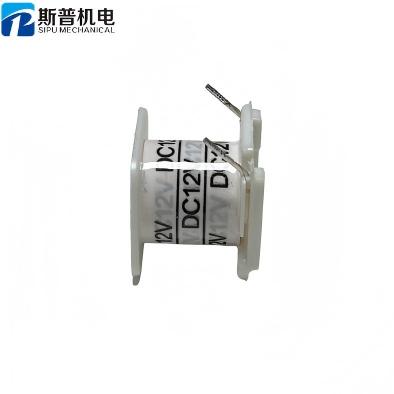
Tapped coil
4. Custom Design: Open-Frame Structure (No Safety Guard)
Based on the client's workshop layout and production requirements, this project adopted the Open-Frame structure (no safety enclosure) after a joint technical review. Compared with traditional fully-enclosed designs, this approach delivers 4 core differentiating advantages:
ü Visibility + Easy Maintenance = Ultimate OEE: The open structure provides unobstructed visibility for commissioning, inspection, and troubleshooting; daily maintenance requires no enclosure removal, reducing downtime by 60%+
ü Better Heat Dissipation, Longer Service Life: Enhanced natural cooling for motors and servos, significantly extending the machine's MTBF
ü Flexible Integration, Free Layout: Clients can freely adjust equipment position according to workshop flow, facilitating future station expansion and capacity ramp-up
ü Lower Cost, Higher Cost-Performance: Saves on enclosure material, processing, and assembly costs, making the overall equipment more competitively priced
This design is particularly well suited to high-end manufacturing scenarios such as automotive electronics, which feature high automation, standardized workshop management, and professionally trained operators. It was also a key factor in the scheme being selected after multiple competitive comparisons.
5. Customer Value
² Stable Cycle Time: Single-line capacity of 500–600 pcs/h, fully automated across all processes, meeting the stable delivery needs of medium-to-large volume orders
² Multi-Customer Validation: Line cycle time, yield, and maintainability have been rigorously verified in batch production at multiple customer sites
² Quality Upgrade: Resistance first-pass yield ≥ 99.5%
² Labor Saving: Only 1–2 inspectors required per line, reducing labor cost by 70%
6. Conclusion
The successful delivery of this 13F relay fully automatic coil production line marks another milestone in our deep engagement with relay intelligent manufacturing.
Worth noting: The production line platform is highly flexible — in addition to 13F relays, we can also customize automated production for solenoid valve coils, motor stator coils, VCM (Voice Coil Motor) coils, and other coil categories, leaving ample room for customers' future line expansion.
Going forward, we will continue to drive with the dual engines of "process innovation + non-standard customization", partnering with global customers such as Hongfa, Omron, Panasonic, and TE Connectivity to push the relay and coil manufacturing industry toward higher efficiency, higher quality, and higher intelligence.
Business Inquiries: +86 180 6910 1772
Website: www.sipuglobal.com